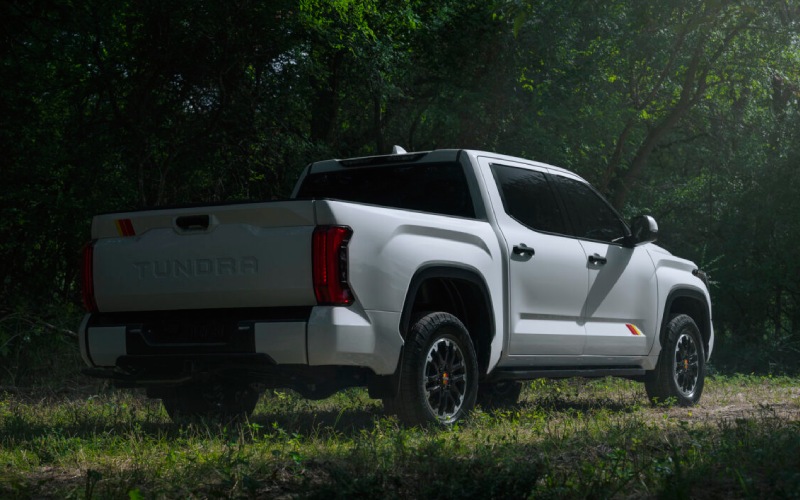
Stevinson Toyota West - How Much Can the 2026 Toyota Tundra Tow Around Denver, CO?
The 2026 Toyota Tundra gives truck shoppers a confident answer when towing capability is a top priority. When properly equipped, the Tundra offers a max towing capacity of up to 12,000 lbs., supported by powerful engine options and available trailering technologies that help make the process feel more controlled. For drivers around Denver, CO, that matters because towing can involve more than flat roads and open lots. Elevation changes, highway speeds, tight parking areas, recreation access points, and business demands all place different expectations on a pickup.
Towing capacity is only part of the story, though. A strong truck also needs torque, chassis composure, braking support, visibility, and technology that helps the driver manage the trailer. Toyota approaches the 2026 Tundra with that broader view. The available i-FORCE twin-turbo V6 engine produces 389 HP and 479 lb.-ft. of torque, while the available i-FORCE MAX twin-turbo V6 hybrid powertrain produces 437 HP and 583 lb.-ft. of torque. Those figures are important because torque is what helps a truck get a load moving, maintain confidence on grades, and respond smoothly when the driver needs power.
What the Tundra Tow Rating Means
A max tow rating of up to 12,000 lbs. means the 2026 Toyota Tundra can be configured for serious towing work when properly equipped. This can be relevant for enclosed trailers, utility trailers, recreational equipment, small business needs, and other properly matched loads. However, shoppers should always match the specific truck configuration to the specific trailer. Cab style, bed length, drivetrain, trim, options, hitch equipment, passengers, cargo, and payload all affect the real-world towing setup.
Payload is another number worth understanding. Toyota lists a max payload of up to 1850 lbs. for the 2026 Tundra when properly equipped. Payload includes weight placed in or on the truck, including passengers, cargo, accessories, and tongue weight from the trailer. This is why towing discussions should never stop at the trailer’s total weight. A properly planned towing setup looks at tow rating, payload, hitch requirements, braking needs, and how the vehicle is loaded.
Powertrain Choices for Towing Confidence
The 2026 Tundra offers two standout powertrain paths. The available i-FORCE twin-turbo V6 is designed to deliver quick acceleration and strong performance from a gasoline engine with twin turbochargers. With 389 HP and 479 lb.-ft. of torque, it gives shoppers a robust gas-powered choice that fits a wide range of towing and daily driving needs.
The available i-FORCE MAX Hybrid Powertrain adds an electric motor to the twin-turbocharged gasoline engine, creating a combined output of 437 HP and 583 lb.-ft. of torque. For towing, that added torque can be especially appealing because it supports responsive acceleration and confident pulling strength. Drivers who regularly tow, travel through elevation changes, or want the strongest available Tundra powertrain should give i-FORCE MAX careful consideration during a test drive.
Here are practical points to compare when choosing a towing-focused Tundra:
- Trailer weight: Know the loaded trailer weight, not only the empty trailer weight.
- Tongue weight: Confirm how much trailer weight will press down on the hitch and count against payload.
- Passenger and cargo load: Include people, tools, gear, coolers, supplies, and bed cargo in the total payload plan.
- Terrain and distance: Consider whether towing will happen mostly around town, on highways, or along routes with elevation changes.
- Technology preferences: Look for available towing assistance features if backing, aligning, or parking a trailer is a regular concern.
Available Trailer Backup Guide With Straight Path Assist
One of the most useful available towing technologies on the 2026 Toyota Tundra is Trailer Backup Guide With Straight Path Assist. Toyota explains that this driver-assistance technology uses sensors and cameras to help keep a trailer in a straight line as the driver backs up. That can be a major benefit because backing a trailer is often the part of towing that creates the most stress, even for drivers who feel comfortable once moving forward.
This available system is helpful in realistic local situations, such as backing into a driveway, positioning a trailer near a storage area, maneuvering at a jobsite, or lining up at a recreation destination west of the metro. The technology does not remove the need for care and attention, but it gives the driver more support and visual awareness. For shoppers who plan to tow frequently, it is worth asking for a demonstration during a test drive or vehicle walkaround.
Visibility and Control Matter With a Trailer
The available Panoramic View Monitor is another feature that can support towing confidence. It uses cameras on the front, sides, and rear of the truck to provide a 360-degree view of what is happening outside. In a full-size truck, that broader camera perspective can help with parking, trailer alignment, curb awareness, and tight-space maneuvering.
The available 12.3-in. digital gauge cluster also helps by giving drivers access to safety and convenience features, navigation, audio controls, off-road features, towing functions, and more. A clear information display can make a difference when the driver wants quick access to important vehicle data. The available 14-in. Toyota Audio Multimedia touchscreen further improves visibility for camera views and everyday controls, making the cabin feel more intuitive during both towing and non-towing drives.
How to Evaluate Towing During a Test Drive
A test drive can reveal far more than a spec sheet. Even if a trailer is not attached during the appointment, shoppers can still evaluate the truck’s acceleration, braking feel, visibility, seating position, control layout, and technology. It is also a good time to compare trims and ask which configurations are best suited for specific towing plans.
- Discuss the trailer first: Bring details about trailer type, loaded weight, tongue weight, and braking setup.
- Compare powertrains: Drive i-FORCE and i-FORCE MAX options if possible to feel the difference in response.
- Review towing equipment: Ask about the tow hitch receiver, Integrated Trailer Brake Controller, TOW/HAUL modes, and available towing technology.
- Check visibility: Sit in the driver seat, adjust mirrors, and view camera displays to understand the truck’s sightlines.
- Confirm payload planning: Talk through passengers, cargo, accessories, and tongue weight so the selected truck fits real use.
The right towing truck should feel predictable and comfortable, not merely powerful. Steering feel, seating comfort, mirror placement, camera clarity, and easy-to-reach controls all contribute to a better experience when a trailer is attached. This is why a detailed walkaround and careful test drive are so valuable.
Frequently Asked Questions:
Does every 2026 Toyota Tundra tow 12,000 lbs.?
No. The 12,000-lb. figure is the maximum towing capacity when the 2026 Toyota Tundra is properly equipped. Actual towing capacity depends on configuration, equipment, payload, and other factors. Shoppers should confirm the specific rating for the exact truck being considered.
Is i-FORCE MAX better for towing?
The available i-FORCE MAX Hybrid Powertrain offers the highest listed output for the 2026 Tundra, with 437 HP and 583 lb.-ft. of torque. That added torque can be very helpful for drivers who tow often or want stronger acceleration under load. The available i-FORCE twin-turbo V6 also delivers strong capability, so the best choice depends on towing frequency, load size, and driving preference.
What Tundra features help with backing up a trailer?
The available Trailer Backup Guide With Straight Path Assist is designed to help keep a trailer in a straight line while backing up. The available Panoramic View Monitor can also help by providing a 360-degree view around the truck, which is useful when maneuvering in tighter areas.
The 2026 Toyota Tundra is a strong option for towing because Toyota pairs substantial power with practical support technologies. Rather than focusing only on peak numbers, it gives drivers a more complete towing experience through available torque-rich powertrains, camera-based visibility, trailering assistance, and a suspension design that supports stability and comfort. For Denver, CO shoppers who want a full-size truck that can work hard and remain easy to live with, the Tundra deserves a close look.